

C4 Energy Drink is a caffeine-containing drink that is intended for people who want to feel more alert, energetic, and focused during the day. C4 is a line of sports nutrition products and energy drinks, part of the Cellucor sports nutrition line.
But is the C4 Energy Drink really beneficial to you? What is the amount of caffeine in it? Does it enhance the effectiveness of exercise, and what are the potential side effects that consumers need to be aware of when consuming it regularly?
These responses will vary depending on the type of caffeine and the amount consumed, as well as the sensitivity to caffeine of the person taking it. Some C4 energy drinks are actually labelled as “zero sugar,” and the caffeine in these drinks may still provide a significant amount of caffeine to an adult’s daily consumption.
Caffeine is the most critical ingredient to review, as it has proven effects on alertness and fatigue. It may also have adverse effects on sleep and nervousness, as well as on the heart and blood vessels in sensitive people.
In this detailed in-depth review of C4 Energy Drinks, the product’s nutrition, key ingredients, benefits, safety, and scientific evidence will be discussed, along with some practical tips to consume the drink responsibly.
This is designed to distinguish between science and marketing claims made by manufacturers to ensure that consumers make informed choices.
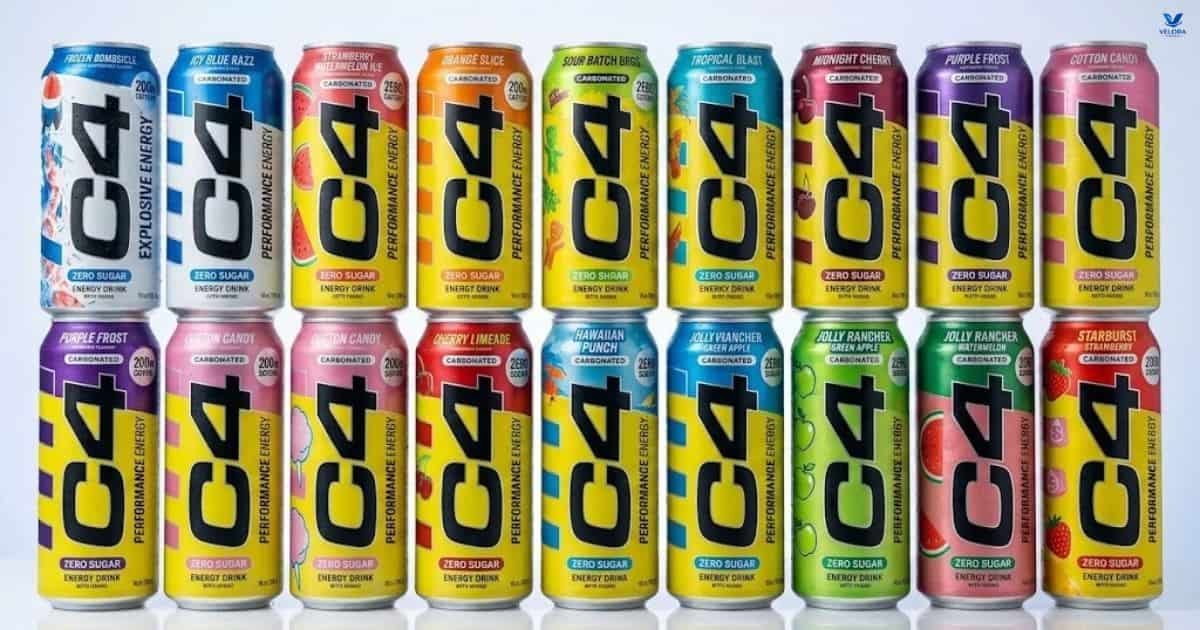
C4 Energy Drink: Key Findings at a Glance
· The caffeine content: Caffeine content has been given for certain U.S. C4 Energy Original and C4 Smart Energy products—these are listed or advertised as containing 200 mg of caffeine per can. Please check the exact product and serving size.
· The sugar content: Some C4 energy drinks are being advertised as zero-sugar. There may be variations in formulations from product to product and market to market.
· Potential benefit: Caffeine may temporarily increase alertness and may be beneficial for selected exercise-performance outcomes.
· Possible concerns: Sleep problems, nervousness, tremors, stomach upset, and heart issues.
· Weight management: C4 has not been proven to be a weight loss treatment, but a drink with no sugar could be useful for controlling other sources of sugar in drinks.
· Overall assessment: C4 is suitable for some healthy adults who do not have a strong sensitivity to caffeine but may not be suitable if the total dose of caffeine is increased, the delivery timing is changed, the health of the individual deteriorates, or they are sensitive to caffeine.
What Is C4 Energy Drink?
C4 Energy Drink belongs to the product family of C4 Energy and pre-workout products, which is a product family of the sports nutrition brand Cellucor.
The brand is aimed at those consumers who are interested in wakefulness, energy, and fitness activity. It has ready-to-drink versions that can be used as supplements, but they are not necessarily the same as C4 pre-workout drinks.
C4 Energy Original
Carbonated, flavored energy drinks are part of C4 Energy Original. According to a U.S. product listing, a 16-ounce can of cotton candy contains 200 mg of caffeine, has no sugar, and has no calories.
These details apply to that particular listed product. Any other flavors, product generations, and regional formulations should be tested individually.
C4 Smart Energy
Another C4 product, C4 Smart Energy, is on the market as a ready-to-drink product focusing on energy and attention. Cellucor claims to have a 12-fluid-ounce option with 200 mg of caffeine and provides a list of ingredients that is related to the formula.
While they are both C4 products, the ingredients and the serving size may be different.
C4 Energy Drink versus C4 pre-workout powder
C4 Energy drinks are not the same as C4 Original pre-workout powder.
Pre-workout formulas could include exercise-specific ingredients, and recommended serving sizes vary widely from canned drinks.
Consumers should never presume that the amount of ingredients, safety information, or caffeine content of one C4 product is automatically applicable to another.
C4 Energy Drink Nutrition Facts
Evaluations of nutrition information are product specific. The following comparison outlines information reported on two products identified in the U.S. that have been available and is a summary of verified product information versus information that needs to be checked on the current product package.
Note: Product formulations and labels can change. Check the can sold in your market before relying on these figures.
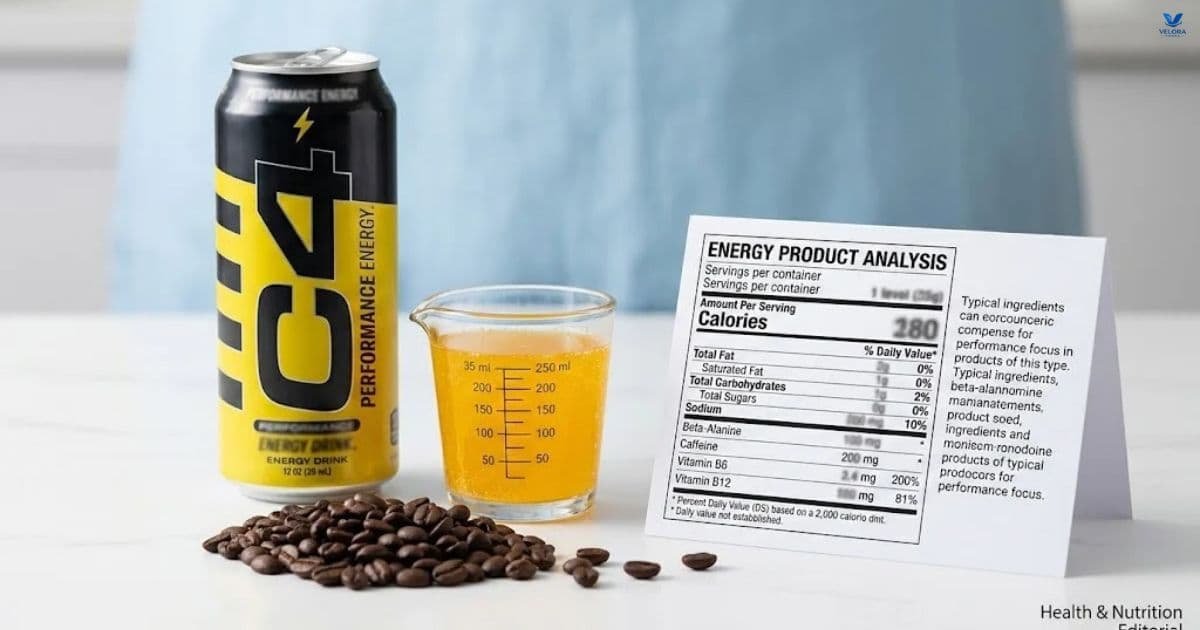
Is the C4 energy drink high in caffeine?
The dose of caffeine in a 200-mg serving is a significant amount per drink.
According to the U.S. Food and Drug Administration, 400 mg of caffeine a day is not a quantity that most healthy adults are likely to experience adverse effects from. But sensitivity varies, and this is only a general reference and is no guarantee of safety.
Half of this daily dose would be provided by one 200-mg can. The two cans would give 400 mg before accounting for caffeine in coffee, tea, cola, chocolate, other energy drinks, or medications.
One can be sufficient for some people to produce unwanted effects.
Is C4 Energy Drink healthy if it doesn’t contain any sugar?
Not necessarily.
A zero-sugar version may be beneficial to consumers who are looking to cut back on sugars in their drinks. But sugar content is just a single component of a product’s nutritional and safety profile.
The effects of caffeine exposure, quality of sleep, personal sensitivity to caffeine, and frequency of ingestion are still significant factors.
C4 Energy Drink Ingredients Explained
The ingredients of a C4 energy drink should be assessed in terms of their function, dosage, and research. The proof is not conclusive that a drink that contains an ingredient is providing a significant health or performance benefit.
Caffeine
The main stimulant to take into consideration when reviewing the C4 Energy Drink is caffeine.
It works on the central nervous system, in particular by inhibiting adenosine receptors that are used to communicate fatigue. This may raise alertness and decrease feelings of fatigue for a short period of time.
Evidence for caffeine’s role in wakefulness and certain exercise parameters. But it depends on the dosage, the level of tolerance, the level of sensitivity, and the stage of sleep.
Caffeine may also disrupt sleep and lead to nervousness or heart palpitations for some consumers.
Green coffee bean extract
According to C4 Smart Energy’s product information, green coffee bean extract is a caffeine source.
The term “naturally sourced caffeine” doesn’t necessarily indicate that it is caffeine-free of side effects. Caffeine from various sources can add up to the total caffeine intake.
What matters is the amount of caffeine per serving, not the fact that a certain source might be safer.
Cognizance
Cognizin has been added to the manufacturer’s C4 Smart Energy formulation and is being sold in association with cognitive performance.
Research with an individual ingredient does not provide a guarantee that a finished energy drink has a positive effect on memory, attention, or mental performance in all consumers.
Researchers would need appropriate studies assessing the final product, the actual amount of these ingredients, and meaningful results to support a strong product-specific claim.
N-acetyl tyrosine
N-acetyl tyrosine is a component of C4 Smart Energy.
Research on tyrosine has looked at possible effects on cognitive function under challenging or stressful circumstances. Findings will vary by study design, dose, and population.
By itself, it does not provide proof that the food or drink will enhance concentration or productivity.
Vitamins and minerals
The manufacturer’s Smart Energy ingredient information lists potassium, niacin, and vitamin B12.
The roles of these nutrients are important physiologically. Their presence, however, does not imply that the drink has a special health benefit to those who consume enough of it for their particular needs through the food of other drinks.
Consumers need to differentiate nutritional ingredients from evidence of a clinically meaningful benefit in a finished product.
Potential Benefits of C4 Energy Drink
Caffeine and the ease of a ready-to-drink beverage are the factors that are most closely linked to the potential benefits of C4.
Temporary improvement in alertness
Caffeine may help consumers feel more alert and attentive for a time following their ingestion.
This can be helpful if someone becomes drowsy but is not the same as getting out of sleep deprivation.
Someone might not feel as tired after having caffeine as they feel when they lack sleep, but they may not have restored the attention, judgment, or reaction time that sleep deprivation caused.
Potential exercise-performance support
Caffeine has been shown to have beneficial effects in certain exercise outcomes, such as endurance and perceived exertion in some situations.
The impact, however, will vary by person, activity, dose, and time. Even though there are supporting studies for caffeine, this does not necessarily mean that all C4 products are effective at enhancing sports performance.
Consumers also should take into account if they need extra caffeine when they’re already drinking coffee or other products with caffeine in them.
A convenient zero-sugar option
Certain C4 formulations offer a sugar-free option to sugary drinks.
This could be useful for those who are looking to limit added sugar in their beverages. But if a drink has a zero-sugar rating, it doesn’t always mean it’s OK to drink all day.
The basic rules of good health—water, proper nutrition, and good sleep—still apply.
Convenient packaging
No cans need to be prepared; they’re portable. This can be beneficial for travel, work, or an occasional workout.
However, convenience does not equal better nutrition and better long-term health.
C4 Energy Drink Side Effects
The primary concerns about C4 Energy Drink are the caffeine and overall evidence of energy drinks. Not all consumers will have side effects, and any signals in the energy drinks category are not necessarily a signal for a specific effect of C4.
Sleep problems and insomnia
Caffeine may make it more difficult to get to sleep and can decrease sleep quality. Drinking an energy beverage late in the day can be particularly problematic for people who are sensitive to stimulants.
Caffeine from energy drinks can also lead to an unhealthy pattern, where inadequate sleep leads to consuming energy drinks, and later those energy drinks interfere with sleep.
Anxiety, nervousness, and jitteriness
Caffeine can cause some consumers to shake, feel restless and/or nervous, and/or feel more anxious.
The chance and severity of these effects are variable. Some individuals may be more prone to be affected by caffeine or multiple products containing stimulants.
If these symptoms do happen, cut back on your caffeine intake and see your doctor if they last or are very strong.
Higher body temperature
Energy drinks could influence indicators of cardiovascular activity, such as heart rate and blood pressure.
Individuals with elevated blood pressure, heart disease, cardiac arrhythmias, or relevant medical history should consult their doctor for personalized recommendations regarding the consumption of highly caffeinated beverages.
If the chest pain is severe, sudden, or accompanied by fainting, or if there is extreme difficulty breathing, or if the heart beats rapidly and irregularly, the assessment should be made promptly by a doctor.
Headaches and digestive discomfort
Headaches, nausea, stomach discomfort, and more symptoms may be linked to caffeine and energy drink consumption.
Those who drink it frequently can also suffer from caffeine withdrawal, including headaches and fatigue.
Risk is dependent on lifestyle and personal circumstances.
Caffeine dependence and tolerance
Caffeine intake can cause tolerance; that is, the same dose might not have the same effect after a while.
Regular users may try to consume more to get the same “feel” of the product. When you abruptly stop getting caffeine regularly, you may experience some temporary withdrawal effects.
By keeping a check on consumption and preventing unnecessary rises, this risk can be mitigated.
Who should avoid or limit the C4 Energy Drink?
Energy drinks should not be used by children and adolescents without pediatric supervision. Women who are pregnant or nursing, people who are on medications that might interact with caffeine, and those with certain medical conditions should consult their individual providers.
Energy drinks should not be combined with alcohol or used to overcome extreme tiredness.
If you have symptoms that are worrying after using an energy drink, do not drink more energy drinks to see if the symptoms go away.
What Does Scientific Research Say About Energy Drinks?
The researchers reviewed 32 studies in a systematic review and meta-analysis published in 2021 that included 96,549 people. It investigated negative side effects attributed to the use of energy drinks.
In its pooled analysis the review concluded that groups of participants who used energy drinks were significantly more likely to experience insomnia and jitteriness or increased activity than control groups.
The reported odds ratio for insomnia was 5.02 with a 95% confidence interval of 1.72–14.63. The odds ratio for jitteriness or increased activity was 3.52 with a 95% confidence interval of 1.28–9.67.
Care should be taken in interpreting these figures.
First, the review was conducted on energy drinks as a whole and not just C4. Secondly, the studies included differed in product, population, and approach. Third, an odds ratio does not tell you the percentage of consumers that will suffer from a side effect.
The results help to highlight the importance of considering the effects of stimulants, but they do not indicate that all users of C4 will suffer from jitteriness or insomnia.
In addition, the review noted that more robust studies with standardized methodologies and a more detailed description of the formulation of individual energy drinks would be helpful.
Major Scientific Disagreements and Evidence Gaps
Is 200 mg of caffeine safe?
Many healthy adults should be able to take a 200-mg dose, but there is no single dose that is safe for all.
The risk profile could vary depending on individual sensitivity, pregnancy, medication use, health condition, sleep, and other caffeine sources.
The FDA’s general recommendation of 400 mg a day for most healthy adults is not a set target or a universal safety level.
Is there any increase in performance during a workout with C4?
There are data on selected exercise-performance outcomes for caffeine. But for the specific formulation, product-specific claims must be supported by evidence.
It is not necessarily assumed that a canned C4 drink will have the same effect after a study of caffeine or another pre-workout drink.
Is there any health benefit in a zero sugar energy drink?
Some consumers may want to reduce the amount of sugar in their diets, especially when switching from a sugary drink. But you can’t remove the effects of caffeine.
The overall nutritional value of a liquid will rely on the beverage’s composition, the individual’s diet, and the number of times it’s consumed.
Do additional ingredients improve focus?
For ingredients that are marketed for cognitive support, there may be some research literature on this topic. However, the dose and condition of ingredients can vary in ingredient-level studies compared to that used in a final C4 product.
Well-designed, independent trials of the real drink would yield more convincing evidence of the overall cognitive impacts.
What further research is needed?
· Some key areas of potential research interest are:
· Independent clinical trials in each C4 formulation.
· Repeated consumption/sleep studies.
· Study on various age groups, caffeine consumption, and health status.
· Research on the interactions of caffeine and other ingredients.
· Research based on the real world incorporating coffee, medicines, other energy drinks, and exercise.
· Transparency in reporting quantity of ingredients, funding of studies, and adverse events.
The gaps in evidence are not indications of the harmful or beneficial effect of a specific product in all scenarios.
Practical Tips for Consuming C4 Energy Drink
If you are an adult thinking of getting C4, the following may help you make a more informed decision.
Check the exact product label.
Verify the amount of caffeine, serving size, sugar content, calorie content, and a complete list of ingredients per can. Don’t assume that a label or nutrition panel from another C4 product will apply.
Count the amount of caffeine consumed each day.
Add coffee, tea, cola, any energy drinks, and appropriate drugs. It is the cumulative caffeine dosage that counts and not just the caffeine in any single product.
Consider your sleep schedule.
Try to avoid caffeine at night, especially before bedtime, especially if you already have trouble sleeping or staying asleep.
Pay attention to personal tolerance
If caffeine triggers anxiety, shaking, and/or palpitations, do not take more caffeine and consult a physician as needed.
Do not treat C4 as a replacement for sleep or hydration.
Caffeine may temporarily make you feel less sleepy, but it is not a substitute for a good night’s sleep. For most basic hydration, water is the first choice.
Ask a healthcare professional when necessary.
Persons with medical conditions, persons taking potentially interacting medications, and persons who have been advised to avoid caffeine should seek individual advice.
Frequently Asked Questions About C4 Energy Drink
How much caffeine is in the C4 Energy Drink?
According to the reviewed C4 Energy Original Cotton Candy product listing, there are 200 mg in a 16 fl oz can. C4 Smart Energy claims to contain 200 mg per 12 fluid ounces. Please always check the label for the latest product.
Does C4 Energy Drink contain any sugar?
There are some C4 energy drinks that are marketed as zero sugar drinks. Always verify that the specific product flavor and formulation are the same by reading the nutrition facts panel and not assuming that all C4 products are the same.
Will C4 Energy Drink benefit before exercise?
Caffeine can aid with alertness and specific exercise responses. The suitability of a C4 beverage depends on the caffeine content, the exercise and personal tolerance, and other sources of caffeine.
Can you drink C4 Energy Drink every day?
There can be a significant amount of caffeine in the daily intake. Suitability is based on total intake, sleep, individual sensitivity, and medical situations. Frequent consumption is not needed for fitness or for general health purposes.
Can teenagers drink C4 Energy Drink?
Energy drinks should be avoided by children and adolescents and should only be consumed under medical supervision due to concerns with stimulant exposure, sleep, and cardiovascular effects.
Does C4 Energy Drink help with weight loss?
This zero-sugar drink can be lower in calories than a sugary drink. But this does not mean that C4 leads to any significant or lasting weight loss and should not be marketed as a weight loss therapy.
Does C4 Energy Drink equal C4 pre-workout?
C4 energy drinks are NOT the same as C4 Original pre-workout powder. They may contain different ingredients, have different serving sizes, and have different uses.
Is the C4 energy drink better than coffee?
It would depend on the products in question. Caffeine levels, amount of serving, additional ingredients, sugar, personal tolerance, and drinking patterns are factors. Compare the labels; don’t assume that one is necessarily better than the other.
Final Verdict: Is C4 Energy Drink Worth It?
C4 Energy Drink may be a good choice for adults seeking an easy-to-consume energy drink, even those who want a sugar-free alternative.
Caffeine’s ability to increase alertness is the best-supported benefit, supported by evidence. The primary worries are sleep disturbances, agitation, anxiety, and potential cardiovascular reactions in vulnerable people.
The best way to do this is to evaluate the product itself for its actual formulation, not just by the branding or marketing claims.
For others, ad libitum use may be an option. For some, the effects of caffeine may be more of a liability than an asset, and some will find it better to reduce their caffeine intake or opt for other alternatives for their reasons.
The takeaway: Read the label, keep an eye on the total amount of caffeine consumed, avoid negative effects on sleep and avoid relying on unconfirmed claims which require product-specific studies.
Medical Disclaimer
This article is meant to be educational and informational in nature only. It is not a medical opinion, diagnosis or treatment. The tolerance and risk of caffeine is different for each person. Seek medical advice for medical conditions, medication use, pregnancy, lactation, and if you have any concerns regarding the consumption of energy drinks.
References
-
- U.S. Food and Drug Administration.
Spilling the Beans: How Much Caffeine Is Too Much?https://www.fda.gov/consumers/consumer-updates/spilling-beans-how-much-caffeine-too-much
-
- Cellucor.
C4 Smart Energy — Official Product Information.https://cellucor.com/products/c4-smart-energy-carbonated
-
- Directions for Me.
C4 Energy Drink, Cotton Candy, Original — Product Listing.https://directionsforme.org/product/244181
-
- Centers for Disease Control and Prevention.
The Buzz on Energy Drinks.https://www.cdc.gov/school-nutrition/energy-drinks/
-
- Nadeem, I. M., Shanmugaraj, A., Sakha, S., Horner, N. S., Ayeni, O. R., & Khan, M. (2021). Energy drinks and their adverse health effects: A systematic review and meta-analysis.
Sports Health, 13
-
- (3), 265–277.
https://pmc.ncbi.nlm.nih.gov/articles/PMC8083152/
-
- National Center for Complementary and Integrative Health.
Energy Drinks.https://www.nccih.nih.gov/health/energy-drinks
-
- American Academy of Pediatrics.
The Effects of Caffeine on Kids: A Parent’s Guide.https://www.healthychildren.org/English/healthy-living/nutrition/Pages/the-effects-of-caffeine-on-kids-a-parents-guide.aspx