

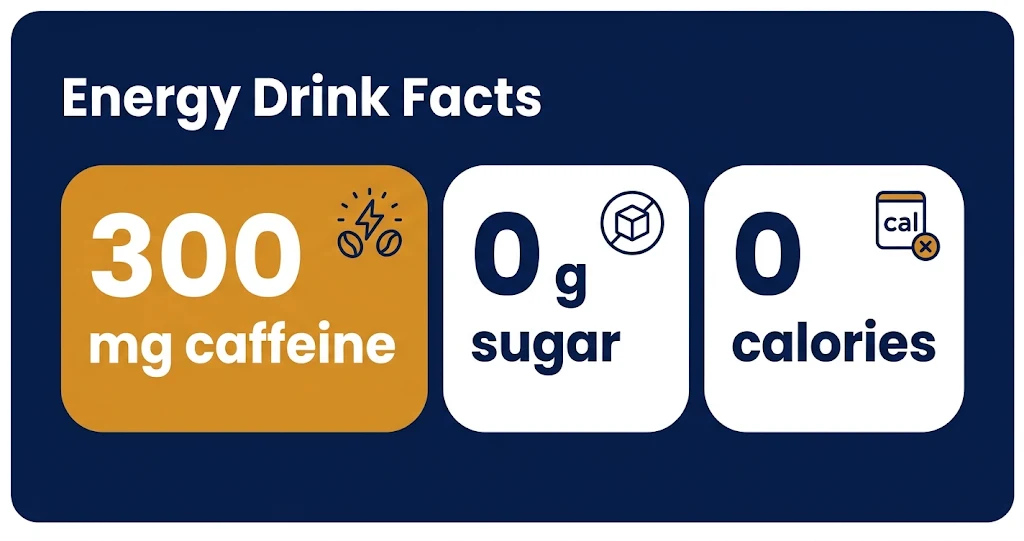
Here is the short version. A 16 fl oz can of Bang Energy drink has 300 mg of caffeine, 0 g of sugar, and 0 calories. That puts one can at about 75% of the 400 mg daily caffeine amount the FDA cites for most healthy adults and almost double the caffeine in a can of Monster Original.
This guide covers what is in the can, how Bang compares with other drinks, how caffeine from Bang affects your body, who should skip it, and why the brand now belongs to Monster Beverage. Figures are for the classic U.S. 16 fl oz can unless stated, and your own label always wins because recipes and sizes change by country. Last updated November 2026.
Disclaimer: This article is for general information only and is not medical advice. Velora Foods is not affiliated with Bang Energy, Vital Pharmaceuticals, or Monster Beverage. Caffeine affects people very differently, so talk to a doctor or pharmacist before drinking high-caffeine products if you are pregnant, breastfeeding, under 18, taking medication, or living with a heart, anxiety, or sleep condition. See our full site disclaimer for details.
Key Takeaways
- Bang Energy drink has 300 mg of caffeine per 16 fl oz can, about 75% of the FDA’s 400 mg daily guideline.
- It has 0 g of sugar and 0 calories, but the caffeine dose is still high.
- One can has nearly double the caffeine of Monster Original and almost four times a Red Bull.
- It is not for anyone under 18, and people who are pregnant, breastfeeding or on medication should ask a doctor first.
- Monster Beverage has owned Bang since July 2023.
Bang Energy Drink at a Glance
| Question | Quick answer |
|---|---|
| Caffeine per 16 fl oz can | 300 mg |
| Caffeine per fl oz | About 18.75 mg |
| Sugar | 0 g |
| Calories | 0 |
| Main label ingredients | Caffeine, amino acids, CoQ10, and B vitamins |
| Current owner | Monster Beverage (since July 2023) |
| Recommended age | Not for anyone under 18 |
| FDA caffeine guideline for healthy adults | 400 mg per day from all sources |
What Is Bang Energy Drink?
Bang is a sugar-free, zero-calorie energy drink created by Vital Pharmaceuticals, also known as VPX Sports, a Florida company that also made Redline. It was sold as a workout-style drink with a long flavor list and a loud, high-caffeine identity. Its pitch was simple: the lift of a strong energy drink without the sugar crash of a regular soda-style can. After VPX went bankrupt in 2022, Monster Beverage bought the brand in July 2023.
That pitch worked because many shoppers were already moving away from sugary cans. Bang gave them a zero-sugar option with more caffeine than almost anything else in the cooler and a fitness angle that made it feel like a sports product rather than a soft drink. The flip side is that the same strength is what makes it easy to overdo. If you are new to this category, our list of 50 energy drinks shows where Bang sits against the rest of the shelf.
How Much Caffeine Is in Bang Energy?
Every classic flavor carries 300 mg of caffeine in a 16 fl oz can. Caffeine Informer reports that the original recipe was higher, at 357 mg per can, before it was lowered to 300 mg. Some countries sell weaker versions: Canada lists 180 mg in a 473 ml can, and Australia and New Zealand list 160 mg in a 500 ml can. Bang also made a 3 fl oz shot with 300 mg, which works out to about 100 mg per ounce, but that product is no longer a focus of the line.
| Drink | Typical serving | Caffeine | Caffeine per fl oz |
|---|---|---|---|
| Bang Energy | 16 fl oz can | 300 mg | About 18.8 mg |
| Monster Energy Original | 16 fl oz can | 160 mg | 10.0 mg |
| Red Bull | 8.4 fl oz can | 80 mg | About 9.5 mg |
| Instant coffee | 1 cup | About 60 mg | Varies by cup size |
| Cola | 12 fl oz can | About 35 mg | About 2.9 mg |
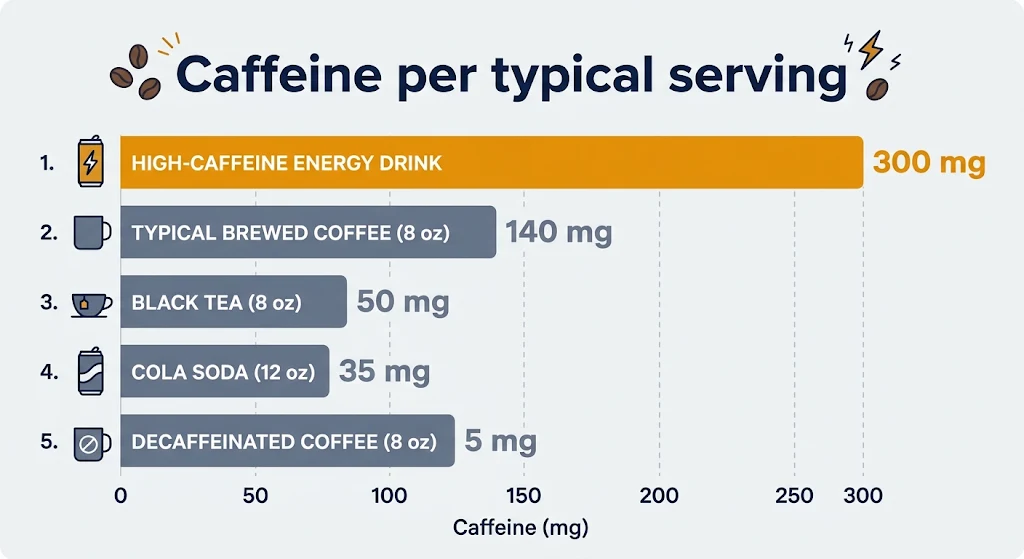
Put plainly, one Bang delivers roughly the caffeine of two Monster cans or nearly four Red Bulls. For flavor-by-flavor numbers on its biggest rival, see our Monster Energy caffeine and nutrition guide, and for the wider field, try our 2026 energy drink comparison.
Bang Energy Drink vs. Monster, Red Bull, and Coffee
Caffeine numbers only mean something next to the things you already drink. Here is how Bang lines up against the most common alternatives.
Bang vs Monster
In the same 16 fl oz size, Bang has 300 mg, and Monster Original has 160 mg. Monster Original also carries a lot of sugar, while Bang has none, so the two make different trade-offs: Monster costs you sugar and calories, Bang costs you a much bigger caffeine dose. Since Monster owns Bang today, you will often find them side by side in the same cooler.
Bang vs Red Bull
Red Bull comes in a small 8.4 fl oz can with 80 mg of caffeine. Per ounce, it is closer to Monster than to Bang, which makes it the gentler choice if you want a light lift. Our ranking of Red Bull flavors is a good place to start if you want to try one.
Bang vs Coffee
A single Bang can carries more caffeine than most home-brewed cups, and the FDA frames 400 mg as roughly two to three 12 fl oz cups of coffee. The difference is speed and context: a can is often finished in minutes, while coffee tends to be sipped. If you are deciding between them, read our guide to coffee versus energy drinks.
Bang Energy Drink Ingredients: What Is Inside the Can?
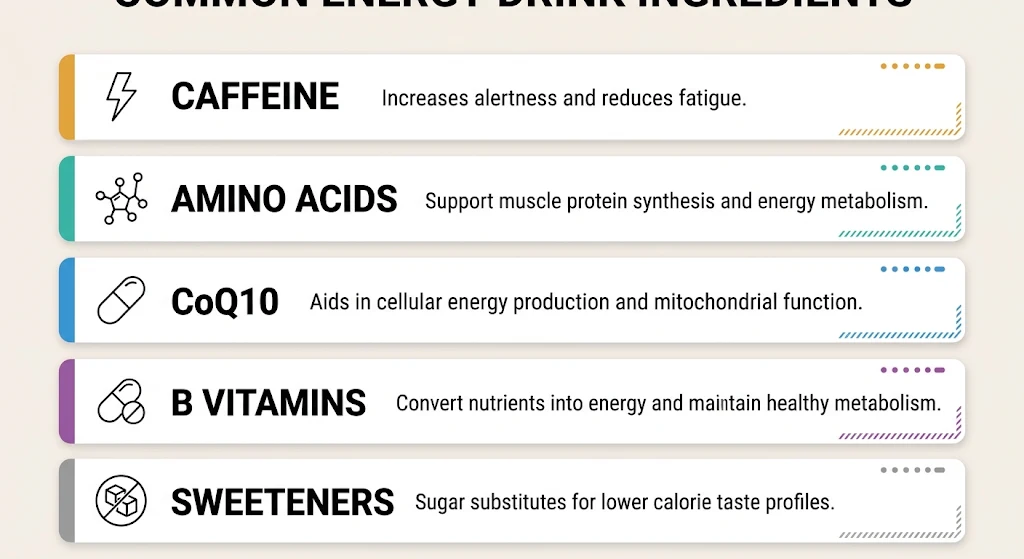
Bang combines caffeine with amino acids, a coenzyme, and B vitamins, then uses artificial sweeteners and flavoring to keep sugar and calories at zero. The table below separates what the brand says each ingredient is for from what a drinker should realistically expect.
| Ingredient | Why it is added | What to know |
|---|---|---|
| Caffeine (300 mg) | Alertness, focus, reaction time | This is the ingredient you actually feel, and it is the reason for most side effects. |
| Essential amino acids (BCAAs) | Marketed for workouts and recovery | Benefiting from the small amount in a drink is unproven. |
| CoQ10 | Marketed for energy and focus | Does not replace the effect of caffeine |
| B vitamins (niacin, B6, B12) | Energy metabolism support | Essential nutrients, but they do not give you energy by themselves. |
| Electrolytes | Listed on some retail pages | Not a substitute for water or a sports drink |
| Sweeteners and flavors | Taste without sugar | Check your can, since recipes have changed over time. |
What Was Super Creatine?
For years, Bang advertised an ingredient called Super Creatine. Monster sued over the claim, and a court later found that the advertising was false. A permanent injunction now stops the brand from marketing its drinks as containing it. If you see old posts or old cans promising creatine, treat them as outdated.
Bang Energy Drink Nutrition Facts: Sugar, Calories, and Sweeteners
Classic Bang has no sugar and no calories, which is its main selling point against sugary cans. That helps if you are cutting sugar, but zero sugar does not mean low risk, because the caffeine load is the larger issue. The sweeteners that replace sugar are a separate question, and the long-term effects of regular artificial sweetener intake are still debated, so moderation is the sensible approach.
Our guide to sugar-free versus regular energy drinks explains the trade-offs in more detail, and the daily sugar intake calculator shows how much room you have in a normal day. Remember that a zero-calorie drink will not replace a meal, so do not use Bang to skip eating.
How Caffeine in Bang Energy Drink Affects Your Body
Caffeine is a stimulant that blocks the signals that make you feel tired. At 300 mg, the dose in one Bang is large enough that most people will notice it.
What You May Feel in the First Hour
Many people feel more alert within about 30 to 60 minutes, with sharper focus and faster reaction time. For some, the same dose brings jitters, a racing pulse, a restless stomach, or a feeling of being wired rather than focused. Reactions depend on body size, your usual caffeine intake, medication, and your own sensitivity.
How Long Does It Last?
The half-life of caffeine is commonly estimated at around five hours, but it varies widely from person to person. That means a can finished at 4 p.m. can still leave a meaningful amount in your system late in the evening and interfere with sleep. If you struggle to fall asleep, treat mid-afternoon as the cutoff.
Is Bang Energy Drink Safe? Daily Caffeine Limits
The FDA cites 400 mg of caffeine a day, from all sources, as an amount not generally linked with negative effects in most healthy adults. The agency also notes wide differences in sensitivity and in how fast people clear caffeine and says toxic effects such as seizures can appear with rapid intake of around 1,200 mg. One can of Bang uses up three-quarters of the daily figure before you count coffee, tea, or pre-workout powder.
| Scenario | Caffeine total | Share of 400 mg | Reading |
|---|---|---|---|
| 1 can of Bang | 300 mg | 75% | Leaves about 100 mg for the rest of the day |
| 1 Bang + 1 cup of coffee (about 95 mg) | About 395 mg | About 99% | At the limit |
| 1 Bang + 1 Monster Original | 460 mg | 115% | Over the guideline |
| 2 cans of Bang | 600 mg | 150% | Well over the guideline |
| 4 cans of Bang in a short time | 1,200 mg | 300% | Matches the intake the FDA links to seizures |
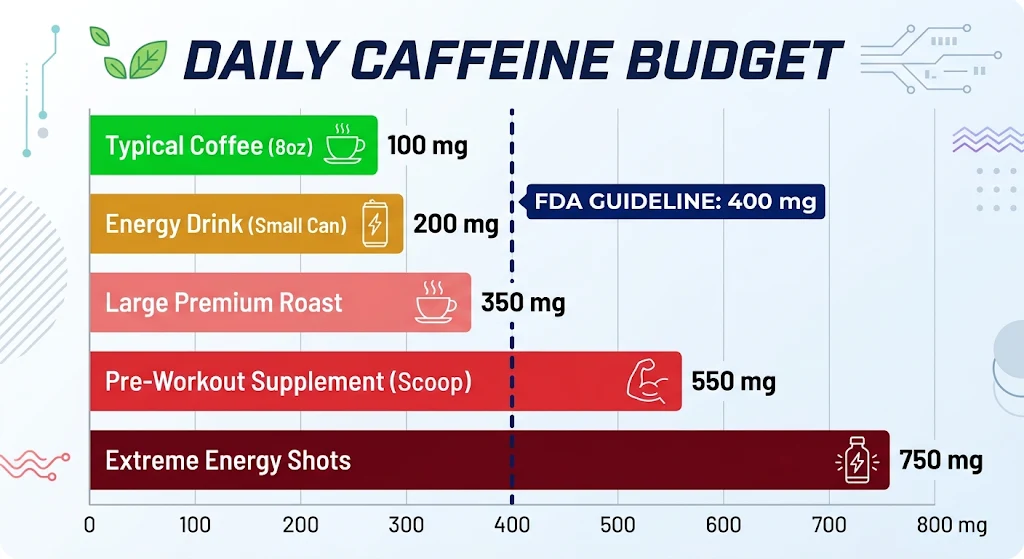
The coffee figure is an approximation, since cups vary widely. The pattern is the point: Bang leaves very little margin, so it works best as your only caffeine source for the day.
Possible Side Effects of Bang Energy
Too much caffeine can cause headaches, trouble sleeping, nervousness, irritability, a fast heartbeat, tremors, and an upset stomach. The Bang label itself warns about nervousness, irritability, sleeplessness, and, occasionally, rapid heartbeat. If you notice these symptoms, cut back and talk to a health professional. Our pages on energy drinks and liver health and Red Bull side effects cover related risks that apply to the whole category.
Who Should Avoid Bang?
The label says Bang is not for anyone under 18 and is intended for healthy adults. Check with a doctor first if you are pregnant, trying to become pregnant, or breastfeeding; if you take medication; or if you have a heart condition or anxiety disorder. People who are simply sensitive to caffeine can feel effects well below 300 mg. Drinking plenty of water also matters, and the daily fluid intake calculator can give you a starting point.
How to Drink Bang Energy Drink Safely
If you decide to drink Bang, a few habits lower the chance of a bad experience.
- Count your total caffeine. Add up coffee, tea, soda and supplements before you open a can.
- Stop at one can. A second can pushes most people past the FDA guideline.
- Do not drink it late. Leave at least eight hours between your last can and bedtime.
- Drink it with food and water. An empty stomach can make jitters and nausea worse.
- Sip, do not chug. Rapid intake raises the peak dose your body has to handle.
- Check regional labels. Cans sold outside the U.S. may contain less caffeine.
- Do not use it to cover for poor sleep. If you need a can every day to function, the real problem is usually rest.
Common Bang Energy Drink Myths
Myth: Zero sugar means it is healthy. Zero sugar only removes one concern. The caffeine is still 300 mg.
Myth: Bang contains creatine. The Super Creatine claim was found to be false advertising, and the brand may no longer market its drinks that way.
Myth: The vitamins give you energy. B vitamins support normal metabolism, but the lift you feel comes from caffeine.
Myth: Every Bang flavor is different. The classic flavors share the same 300 mg of caffeine, so choosing a different flavor will not change the dose.
Bang Energy Drink Flavors and Price
Over the years the lineup has included flavors such as Blue Razz, Peach Mango, Star Blast, Wyldin’ Watermelon, Sour Heads and Strawberry Blast, though Monster has dropped some since buying the brand. At U.S. grocery chains a single 16 fl oz can has typically been listed at roughly $2 to $3, with multipack cases working out cheaper per can. Prices and stock vary by store and region, so check locally.
Bang Energy Drink Brand History: What Happened After Monster?
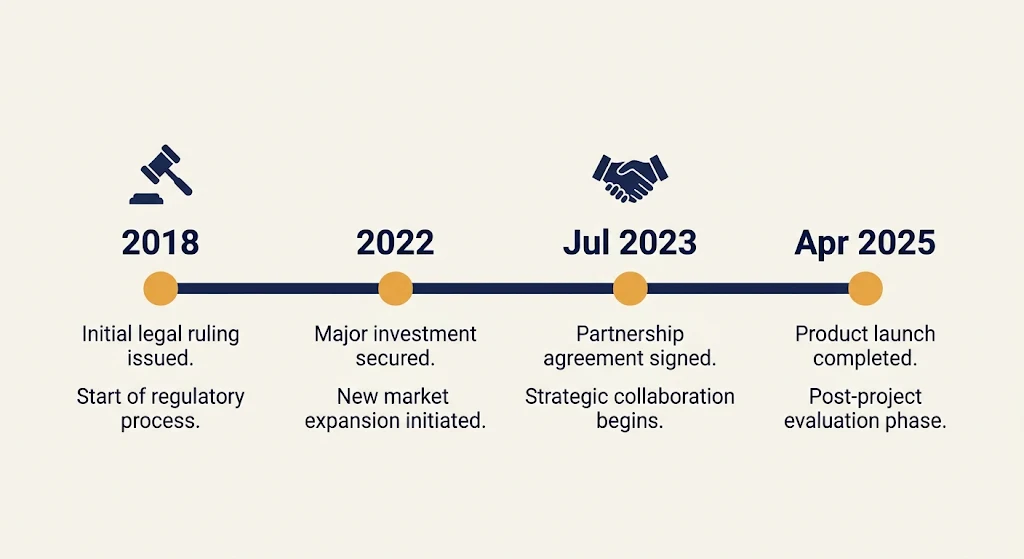
Bang’s story is as dramatic as its marketing. The company fought several lawsuits, and one of them, brought by Monster over Super Creatine, ended its independence.
| Date | Event |
|---|---|
| 2018 | Monster sues Bang and its CEO over false advertising claims, including Super Creatine |
| 2022 | A jury rules against Bang; VPX files for Chapter 11 bankruptcy |
| July 2023 | Monster Beverage buys the brand and its Phoenix plant for $362 million |
| April 15, 2025 | The Ninth Circuit upholds Monster’s roughly $311 million win |
| Today | Bang is a Monster brand; some older flavors and products have been dropped |
Because the lineup has been trimmed since the acquisition, a flavor you remember may not be on shelves now. Availability and recipes also differ between stores and countries, so read the can.
Bang Energy Drink Alternatives With Less Caffeine
If 300 mg feels like too much, several drinks sit lower on the caffeine scale. Compare our reviews of C4 Energy, Celsius, Alani Nu and Bloom, or browse everything in our Energy & Functional Drinks section.
Bang Energy Drink FAQs: Caffeine, Safety and Ownership
How much caffeine is in a can of Bang?
A 16 fl oz can of Bang contains 300 mg of caffeine in the U.S. Canadian and Australian versions are lower.
Is Bang sugar-free?
Yes. The classic can lists 0 g of sugar and 0 calories, using artificial sweeteners instead.
Is Bang stronger than Monster?
Yes. Bang has 300 mg per 16 fl oz can, while Monster Original has 160 mg in the same size.
How many Bang drinks a day is safe?
Because the FDA figure of 400 mg covers all sources, one can leaves about 100 mg for everything else. Many people are comfortable with less, and some people react to even small amounts.
Can I drink Bang before a workout?
Many people do, since it is marketed that way. Keep in mind that a 300 mg dose combined with hard exercise and heat can raise your heart rate more than usual, so drink water and consider a lower-caffeine option if you feel shaky.
Who owns Bang Energy now?
Monster Beverage bought Bang’s assets from Vital Pharmaceuticals in July 2023 for $362 million.
Is Bang Energy still sold?
Yes, Bang is still sold under Monster, although the lineup is smaller than it once was and stock varies by retailer.
Final Verdict: Is Bang Energy Drink Worth It?
Bang is one of the strongest mainstream energy drinks, and its sugar-free formula does not change that. One can is fine for many healthy adults if it is the only caffeine they have that day, but it leaves almost no room for coffee or a second energy drink. If you want the effect with a bigger safety margin, pick a lower-caffeine can and read the label first.
A practical rule of thumb: decide your caffeine budget for the day first, then choose the drink that fits it. If Bang uses most of that budget, skip the afternoon coffee and the second can. If your schedule needs several small boosts, a lower-caffeine drink spread across the day is easier on your sleep, your heart rate and your stomach. Whatever you pick, keep water nearby and pay attention to how your body responds, since that feedback is more reliable than any label.
References
- U.S. Food and Drug Administration. Spilling the Beans: How Much Caffeine Is Too Much? fda.gov
- Caffeine Informer. Bang Energy Drink caffeine content. caffeineinformer.com
- FoodBev Media. Monster secures $311m victory over Bang Energy in false advertising case (April 17, 2025). foodbev.com